About Us
Building legal AI that feels useful from day one
KanoonGPT is an AI technology specialized in Indian law, developed by Klarity AI Labs LLP, a DPIIT-registered startup. Students, professionals, and teams use it to research Indian law faster, with answers that are clearer and ready to use.
We are grateful to AIC-BAMU Foundation for recognizing KanoonGPT with a grant under the Startup India Seed Fund Scheme.
KanoonGPT is also largely funded by its Pro subscribers, and we are thankful to them that we stand here today.
Focused Scope
Indian legal content, structured section by section for reliable retrieval and citation.
Practical Output
Explanations, summaries, and references that are actually usable in study and daily legal work.
Continuous Improvement
We ship updates regularly based on feedback from the legal community.
Who is behind KanoonGPT
The KanoonGPT team comprises AI engineers who worked at Anthropic and xAI, and law professionals from NLU Mumbai. That combination keeps us grounded: strong engineering standards on one side, and real legal context on the other.
We are not trying to build a flashy demo. We are building a dependable legal product that people can come back to every day.
Our mission
We are building KanoonGPT to make high-quality Indian legal intelligence accessible to everyone, not just large teams with large budgets.
Our goal is simple: deliver cost-effective, practically unlimited AI access powered by deeply structured Indian legal data so users can research, draft, and reason faster with confidence.
The problem
Why generic AI falls short on Indian law
Tools like ChatGPT, Gemini, and NotebookLM are powerful general-purpose assistants. But when you ask them about Indian statutes, they typically rely on web search or basic document OCR — neither of which understands how bare acts are actually structured.
Generic AI relies on surface-level reading
Most general AI tools ingest legal PDFs through standard OCR and treat the output as flat text. They cannot reliably distinguish a section number from a cross-reference, a marginal note from body text, or a section title from its content.
Ask a simple question like "Explain BNSS Section 20" and many systems fail — or fall back to web search, which often returns outdated or mismatched sources.
No comprehension of legal hierarchy
A bare act is not a paragraph of prose. It has chapters, sections, sub-sections, provisos, and marginal annotations — each with distinct legal meaning. Generic AI reads the words but misses the structure that makes those words actionable.
Without that hierarchy, even a correctly extracted sentence can be cited out of context — Section 9's title confused with Section 10's content, or a marginal note stitched into the middle of a clause.
Traditional OCR
Where standard OCR breaks down
Traditional legal tech — and the OCR pipelines behind most generic AI tools — were built for clean, single-column documents. Indian bare acts are anything but that.
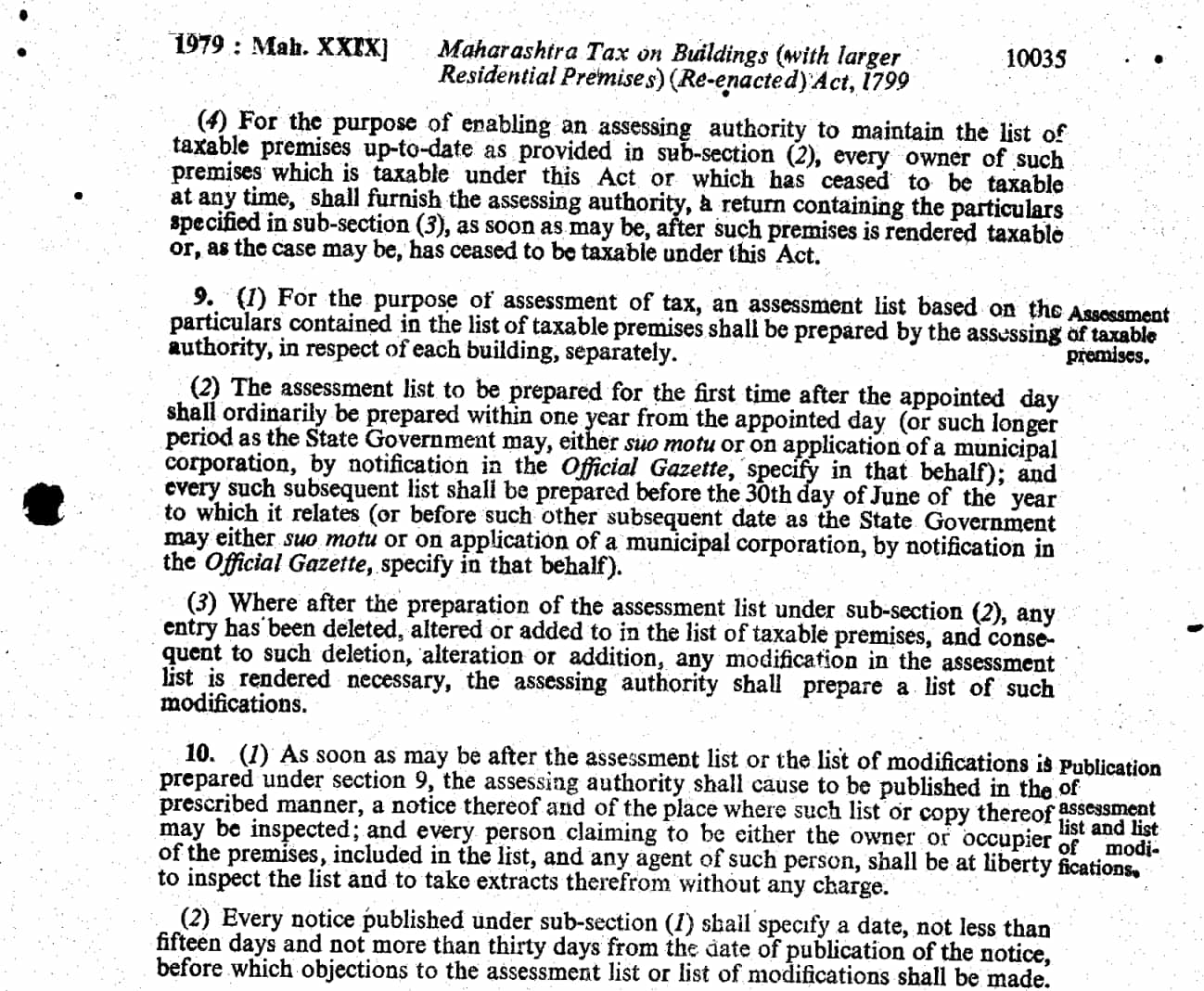
Scanned statute pages carry marginal annotations, multi-column layouts, binding-hole artifacts, and dense cross-references. Standard OCR flattens all of it into one garbled stream of text.
- Marginal notes bleed into the main body, corrupting section content
- Section numbers appear dozens of times across headers, footers, and indexes
- Scan artifacts and line breaks split words and clauses mid-sentence
Our approach
How KanoonGPT goes beyond traditional legal tech
Traditional legal tech is strong at search and reference over pre-indexed databases. KanoonGPT is built for a different layer: reliable AI understanding on top of deeply structured legal documents — not raw OCR output.
Native OCR alone is not enough for Indian legal PDFs. A single section number can appear many times across headers, footers, cross-references, indexes, and case citations. If a user asks, "Explain BNSS Section 20", many systems fail unless the prompt is expanded to "Explain Bharatiya Nyaya Suraksha Sanhita Section 20". Even then, they can still retrieve the wrong context because the document itself is ambiguously parsed.
KanoonGPT solves this through extensive PDF digitization with document understanding, not just text extraction. We map hierarchy, section boundaries, headings, citations, and context links before AI retrieval. That same pipeline is applied across statutes and case law corpora, so answers are tied to the right legal unit — not just a matched number in garbled text.
Structured parsing
Sections, sub-sections, and provisos are identified and stored as discrete legal units — not flattened text.
Context-aware retrieval
AI answers pull from the correct section with its title, content, and surrounding hierarchy intact.
Built for Indian law
Designed around how bare acts, gazette compilations, and judgments are actually formatted and cited.
How we build
We focus on clean legal data pipelines, careful document processing, and product decisions that reduce confusion for users. Every feature has to answer one question: does this genuinely save time?
What we care about
Clarity over hype, speed without losing quality, and an interface that remains approachable even when legal material is complex.
Why we exist
Democratizing access to legal knowledge and legal AI
For too long, reliable legal knowledge has sat behind expensive law firms, legacy software, and workflows built for institutions with large budgets — not for the lawyer or citizen who needs answers today.
KanoonGPT exists to change that. We want to make life easier for first-generation lawyers building their practice without enterprise resources. We want litigants and citizens to have an accessible second opinion from AI — so they understand where they stand in a matter before the next hearing, consultation, or decision.
We believe the law is equal — made for everyone, irrespective of gender, caste, or financial status. That belief is grounded in the Constitution of India: a republic committed to justice, dignity, and equal access under the law.
Made in India. Made for भारत.
Sovereign AI for Indian Law